
Explore Lessons.
Space Exploration: Characteristics of Planets
Take a “stroll” through the solar system to investigate Earth in the context of other planets and moons. Students compare the characteristics of each planet against Earth, with a special focus on the conditions that allow life — liquid water, an atmosphere — and which planets or moons might support life now or in the future. This free-roam VR science incursion maps to Australian Curriculum v9 codes AC9S2U01 (Year 2) and AC9S6U02 (Year 6), and runs at your school across South Australia and Victoria.

ISS: Curiosity in Orbit
Step into the boots of an astronaut to experience life beyond this world. From mission control in Houston to a launchpad at Cape Canaveral, students follow the journey to orbit and step inside the International Space Station. By running experiments actually done on board the ISS, students explore the scientific method and the science and engineering practices behind real discoveries. A free-roam VR science incursion for Years 4 to 9, aligned to the Science Inquiry strand of the Australian Curriculum v9 and delivered at your school across South Australia and Victoria.

Atoms & Molecules: Modelling the Atom
Take a look at the structure of atoms and how they have been modelled over time. Students observe the crystal lattice of salt and the formation of ionic compounds, walk through the models of the atom used across human history, and build atoms of the first 10 elements from protons, neutrons and electrons. This free-roam VR science incursion maps to Australian Curriculum v9 codes AC9S7U05, AC9S7U06, AC9S8U06, AC9S9U06, AC9S9U07 and AC9S10U06 for Years 7 to 10, and runs at your school across South Australia and Victoria.

Space Exploration: Planetary Axial Tilts and Seasons
Take a “stroll” through the solar system to investigate Earth alongside other planets and moons. Students are led through the characteristics of the planets and their axes, with a special focus on Earth's tilt and how its relationship with the Sun causes the seasons. In three dimensions, students see how the Sun's energy is distributed unevenly across Earth's surface, then consider what similar tilts would mean on other planets. This free-roam VR science incursion maps to Australian Curriculum v9 codes AC9S2U01, AC9S6U02 and AC9S7U03, and runs at your school across South Australia and Victoria.
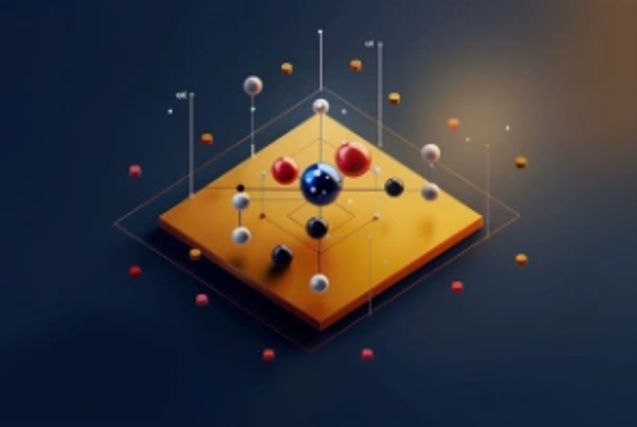
Atoms & Molecules: The Particle Model of Matter
What is everything made of? This free-roam VR science incursion takes Year 3, 5 and 7 students inside the particle model of matter — from the crystal lattice of a salt cube to a particle chamber where the behaviour of a gas changes with temperature and volume. Students also build atoms from protons, neutrons and electrons. Mapped to Australian Curriculum v9 content descriptions AC9S3U04 (solids, liquids and change of state), AC9S5U04 (modelling the motion and arrangement of particles) and AC9S7U05 (particle theory). Delivered at your school across South Australia and Victoria.
Space Exploration: Lunar Phases
Why does the Moon change shape? In this free-roam VR lesson students travel out to Earth's Moon to see the Sun, Earth and Moon system from the outside, then watch the same cycle from the ground. They model the phases of the Moon, work out why eclipses happen only sometimes, and connect the Moon's orbit to the tides on Earth's surface. Mapped to Australian Curriculum v9 codes AC9S2U01, AC9S6U02 and AC9S7U03 for Years 2, 6 and 7, and delivered as a school incursion across South Australia and Victoria.

Level Up Your Learning
Become one of our pilot schools.
Become one of our pilot schools. Lessons typically goes for 90 minutes, set up is 1 hour prior. Host up to 30 students/teachers per lesson.
Choose Any Lesson.
Pilot Pricing - Pricing below is total students per day


